Saturday, 7 June 2014

Family History 2.21


Plantagenet Family origins

 
Count Geoffrey II of Chateau-Landon was count of the Gatinais district, which lies south of Fontainebleau, a short way from Paris. It stretches from the Seine River to the Loire River.
 
About 1035 he married the heiress of the County of Anjou, a district much lower down the Loire River, and more powerful than his own.
 
He died in the mid-forties of the century, when William of Normandy was extending his power, eventually to the stage of conquering the Kingdom of England in 1066.
 
Geoffrey's younger son, born in 1043, was Fulk. When the Count of Anjou died, he left his domains to Fulk's older brother, also Geoffrey. The brothers fought over the control of Anjou; Geoffrey was regarded as incompetent, and was imprisoned by Fulk in 1067. The Church leaders persuaded him to release his brother, which he did, but they soon fell out again, and Geoffrey ended up in prison again, this time for good.
 
So from 1068, as William the Conqueror was getting established in England, Fulk took over the sole authority for Anjou, as Fulk IV.
 
Because of Geoffrey's incompetence, a lot of territory had been lost and Fulk spent most of his time trying to regain the lost lands, and in a struggle with the counties to his north for control of the border areas.
 
Fulk IV died in 1109, and was succeeded by his son, Fulk V.
 
Fulk V married the heiress of the county of Maine, to the north of Anjou, and their eldest son, Geoffrey, later succeeded his father as Count of Anjou.
 
In 1119 Fulk entered an alliance with Henry I of England, and became interested in the crusades. He joined the Knights Templars, spent one season on crusade, and afterwards maintained two knights in the Holy Land.
 
Baldwin King of Jerusalem was looking for a strong military leader to succeed him. He asked Fulk to take this role, which involved marrying Baldwin's daughter, and Fulk, who was a widower, agreed.
 
So by 1131 he had handed control of Anjou to his son, Geoffrey, married Baldwin's daughter, and become joint ruler of Jerusalem on Baldwin's death.
 
By 1144 Geoffrey, whose nickname was Plantagenet, had conquered Normandy, and so become a force to be reckoned with in northern France. In 1128 he had been married to Matilda, daughter of King Henry of England, who was happy to be allied with a promising young leader.


Friday, 6 June 2014

Family History 1.124

Gaze History: NSG Memoir

War 

At Christmas time 1940 Noel and Mary took their young family on a long journey to the South Island to see Win and her family.  Win was expecting her first baby, but had already inherited three children.  While working as a Karitane nurse in Whangarei she had been sent to work for a secondary school teacher who had recently been widowed for the second time: Doug Bird. When she married him, Win took on also the care of Doug’s three children from his previous marriages: Don, Derry and Jennifer.  A few months later they shifted to Ashburton, where Doug got a new job.  So the Gazes were going to spend the Christmas with the Birds in Ashburton, and if their timing was right, perhaps see the new baby. 

To cross the Cook Strait in a slow old ferry, Rangitira, with the possibility of submarines about in wartime was a risky undertaking.  The family travelled down the North Island by overnight express train, and then crossed the next night on the ferry to Lyttelton.  From there another train took them to Ashburton where they enjoyed the usual Christmas festivities, and the children met their new cousins for the first time. 

After Christmas the Gazes spent a few days in Christchurch, until Win’s baby arrived, and Mary travelled back to Ashburton for a day or two with her sister and her new niece, Barbara, while the Gaze children were kept busy by Noel in Christchurch riding the double-decker Sumner tram with its trailer, rowing on the Avon River and climbing the stairs in the Cathedral bell-tower. 

1941 was an eventful year.  Early in the year, Franklin started learning the piano.  In June, Olwyn  started school.  After a shaky start she settled down.  Each day the two youngsters would walk along Ruarangi Road, up Mt Royal Avenue and down to the corner of Owairaka Avenue and from there along to New Windsor Road and their school. Now that there was a car, Noel would on very wet mornings run them to school before he left for work, on one occasion cramming seven little bodies in to the car besides himself. 

About this stage, Noel’s Aunt Kitty Crocombe and her husband George sold their farm and retired. They had nowhere to look after their farm dog, Joe, so Noel agreed to have him for the remaining years of his life. He became devoted to the children and would follow Franklin to his music lesson and wait to accompany him home, well over a kilometre in each direction. 

In November 1941 Mary again travelled to the Nursing Home, this time to await the arrival of Stuart.  Noel looked after the children at home and was delighted to wake Olwyn and Franklin with the news of their little brother’s arrival. Stuart was named after Noel’s friend, Stuart Valentine, and given the second name of Goodwin, which was Julia’s maiden name. 

Days later, the family was woken in the middle of a December night by the sound of ships’ sirens from the harbour, and the playing of searchlights all over the cloudy sky.  The verandah on the side of the house had recently been built and Franklin had been pestering his parents to be allowed to sleep out there. They had agreed on this night of all nights. Franklin was bundled back into his normal bed and the family settled down, to learn in the morning from sombre news broadcasts on the radio that the Japanese had attacked Pearl Harbour.  The fuss in the middle of the night had been to recall the American naval men from their shore leave to their ships; a flotilla of US ships was in Auckland Harbour at the time.

Thursday, 5 June 2014

A pleasant interlude 2


From Delhi

 
Our B+B in Delhi
We decided to fly the next leg of our journey, and took the plane one evening to Delhi, where we stayed in what we would now call a B+B. While there we met John Eade, the son of colleagues of mine from Agartala, who was working at the New Zealand Embassy.

Two evenings later we left on the Madras Mail towards the centre of India, and got off the train two hours later at Agra. There we checked in to a flash-sounding hotel which turned out to be a lemon.  When we left before daybreak for our sunrise visit to the Taj Mahal, we complained to the proprietor, who suggested we put our complaint in writing, and promised that everything would be fixed by the next time we paid him a visit! 
Our hotel in Agra

The visit to the Taj was one of the trip highlights. It is such a beautiful building, and has been so carefully looked after and restored, that we lingered a while just soaking up the atmosphere. Later we visited the red fort and saw the Taj again across the river, and then caught a local train for Lucknow, where we caught a slow train via Patna for Calcutta. Like our earlier trains, this one started out pulled by an electric locomotive, but from Allahabad we changed to a steam loco, because there was at that stage no electric traction on the line through Bihar. The main line direct to Calcutta was electrified as it was the direct way of travelling between Delhi and Calcutta. 
At the Taj Mahal
In Calcutta we explored the central city and paid a couple of visits to the New Market. When we went to a money-changer to change a traveller’s cheque, he greeted us with the good news that the NZ dollar was worth more than the US one. 

After a couple of nights in Calcutta, we Taxied to Dum Dum airport for a 737 flight to Gauhati in Assam. It was a glorious day, and we had great views of the whole Himalaya Range, including Everest, to the north of us. From Gauhati, which sits onn the south bank of the Brahmaputra River, we caught a rather primitive bus for Shillong in the Khasi Hills just to the south. 
Outside our hotel in Shillong

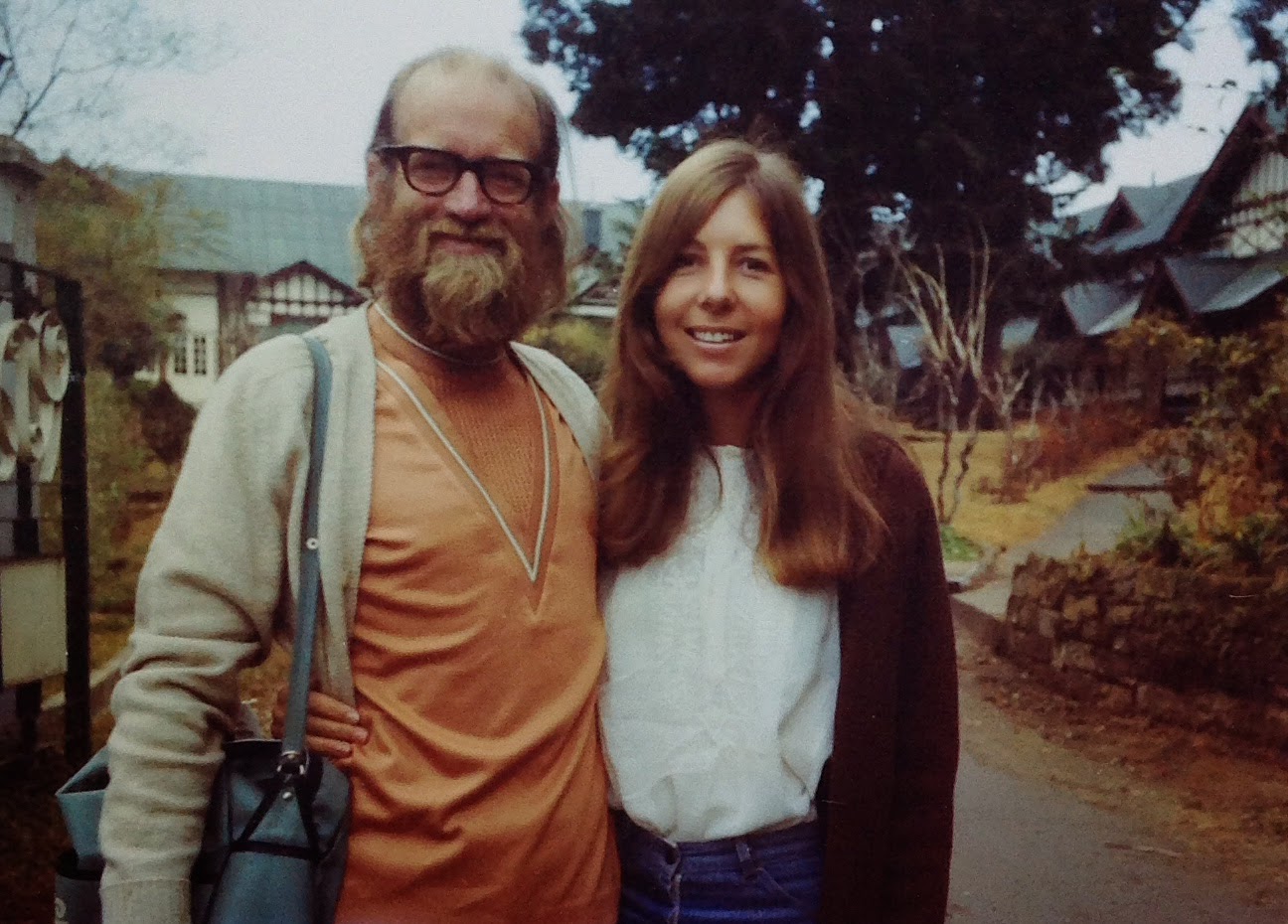
Shillong is a pretty town on the top of the hills at about 5000 feet above sea level. It was winter, the weather was cool, and the country was mostly dry. It is also the town where Terry was born and we were there to show him his birthplace. Unfortunately he did not see much of it, as he had caught the tummy bug that Margaret had had briefly in Delhi, and which I picked up later and suffered from when we were in Brahmanbaria. He had to spend most of our time in Shillong in bed. Margaret and I did not venture far from our hotel room, which was kept warm by the staff feeding the fire all the time, so Terry was able to sleep in comfort.
 
 
Ready to catch the train from Agra


Wednesday, 4 June 2014

Family History 1.123


Gaze History: NSG Memoir

BACKGROUND CIRCUMSTANCES


There are three features of Noel’s family life that stand out: its close involvement with the church, his congenital condition, and the family business.


Both Fred and Julia had been brought up with a close connection with the Auckland Baptist Church, founded in 1855, and in 1885 shifted to its present site at the top of Queen Street as the Baptist Tabernacle. 

During and after Noel’s youth, his father was Church Secretary and Superintendent of the Morning Sunday School (there was also an afternoon one) for 25 years.  His mother was a leading member of the Baptist Women’s Missionary Union both locally and nationally, and his sister, Doris, was for many years its Treasurer.  Julia was also a long-time member of the Manurewa Children’s Home Board. 

By the time of Noel’s young adulthood, the Tabernacle leadership was in the hands of the Rev Joseph W Kemp, one of the outstanding ministers of the Baptist Denomination in the Twentieth Century.


Noel was born with a cleft lip and palate.  In those days the surgery to repair this defect was by modern standards primitive, but Noel was sent to the best surgeon in that specialty, at Wellington Hospital. 

Children with “hare lip” were often treated cruelly by both their classmates and by adults in those days.  Many people regarded hare lip as a sign of intellectual handicap, probably because of the speech difficulty experienced by those born with this defect, in days when surgery could not correct speech and speech therapy could do no better. In fact when Noel was a young lawyer he was not above being ridiculed even from the bench. 

The fact that he overcame this disadvantage to become a successful public speaker and chairman speaks volumes for the love and support of his family. Public speaking was always an ordeal to him; he practised at length whenever he was called upon to give any address, either in the court, in Church or in other public arenas.


For the whole of Noel’s youth, from the time he was a five-year-old, his parents were involved in their own business, that of manufacturing and selling woollen garments.  They made stockings, underwear, swimsuits, socks, scarves and other garments, and employed a team of machinists in their workshop above the shop at the Grafton end of Karangahape Road. Karangahape Road was then the second main street of Auckland, cobbled with wooden blocks from Queen Street to Ponsonby Road. 

All the family, at times, helped in the shop.  During the Great War, 1914-1918, the public flocked to the wool shop to buy wool to knit into garments of all kinds to send to the troops in Europe.  The business was so successful that Fred was able to sell it and retire at sixty, fortunately just before the Wall Street crash and the beginning of the Great Depression.

Tuesday, 3 June 2014

Sketching Week 19

Looking from the window

I have been experimenting with sketching a series of views from the windows of our house. Here is the view from the lounge, looking north-west towards the sea on a beautiful morning:


And this one comes from a photo in a book about the Greek islands, many years old now, but timeless, I imagine.


Just along the street from our house is a classic villa from a hundred years ago. So I sketched part of it the other day:


Monday, 2 June 2014

A pleasant interlude 1


India with Margaret and Terry


The temple at Srirangapatnam, which we visited on our way
from Bangalore to Mysore

By late 1977, Olwyn was planning to marry Dinesh and the wedding was fixed for early February 1978. She asked me to give her away, and we started to plan a trip to the wedding, and while in that part of the world we wanted to see other countries and other places. We also decided that Terry should come too, and we would include Shillong in our plans so that he could see his birthplace. 

With Terry in Chinatown, Singapore
We took the opportunity to visit Melbourne on the way, and stay a few days with Margaret’s brother John and sister-in-law Stella. They then lived in Mornington, a few kilometres down Port Philip Bay from the city centre. 

We flew out of Flemington Airport and changed planes at Singapore to a flight heading for Calcutta. We had a day or so to look around the island city.  When our plane reached Calcutta, the airport was covered in fog, and we were diverted to Bombay.  This changed our plans, so we decided just to go with the flow and disembarked at Bombay Airport in the middle of the night. 

After half a night’s sleep, we rode a packed suburban train to Victoria terminus, where we booked seats for Bangalore in the south. The same afternoon we left on the express and climbed up the Western Ghats, the hills on that side of southern India, as far as Pune, the traditional army city where the British had established military institutions many years before. We hired a “retiring room’, a sort of backpacker’s room, at the railway station for $1.00 for the night. It was on the first floor, with a view over the square in front of the railway station. 
The square in front of the main station, Pune

In the morning we had a quick look around the city of Pune, and then resumed our journey towards Bangalore.  At one of the stops on the line, we bought a meal of mutton korma and had to pay what seemed like an unusually hefty price.  One of our fellow-travellers, an accountant commuting between two towns, thought we had been overcharged, and was upset to think the railway caterers had treated visitors so badly. (Six months after we reached home, we received a letter from him containing a bank draft for the price we had paid.  He had complained to the railway authorities, who had refunded our money.) 

Ready to explore Pune
Early the next morning we had to climb out of the train and walk the length of a long platform to another train. This was because the gauge of the lines changed at this point from 5 feet three inches (the broad gauge system between main centres) to metre gauge, which covers most of South India. On we went and eventually reached the city of Bangalore. One of our fellow-passengers was a young man travelling back to Bangalore, his home town, from Bombay where he worked in the film industry, since called “Bollywood”. 

We liked Bangalore.  We had a reasonably good hotel, and had a chance to visit one of Margaret’s acquaintances, a missionary, Ruth Warner, whose family lived in New Plymouth. The climate was very comfortable and people were friendly. 
Street scene in Bangalore


View from our hotel window in Bangalore
 

Sunday, 1 June 2014

Family History 1.122

Gaze History: NSG Memoir

War comes close


But the life of the whole nation was to be turned upside-down by the outbreak of the Second World War in 1939. Being married with two children and rapidly approaching the age of forty, Noel was at this stage exempt from any suggestion of military service, but as the war dragged on and the supply of younger men was exhausted, and as conscription was introduced, the limits got closer and closer to his group. 

Meantime several of his friends either volunteered or later were conscripted for overseas service, including one friend from whom Noel bought his first car, an Austin 7, complete with canvas top, and celluloid windows, for five pounds. 

But the first effect of the war on the family was at Christmas 1939, when Fred’s new car, a Chevrolet, was commandeered by the army and, to his great disgust, was considered to be worth fifteen pounds less than he had paid for it a few months before. 

The other effect was the imposition of the blackout, whereby all windows had to be completely sealed from light escaping at night.  One night Noel and Mary had put all the lights out and because it was a warm night had lifted the blackout curtains and opened the windows for a draft. They were woken a few hours later by a warden who had been sent to tell them to get their blackout curtains up again, because the moon had been reflecting from their mirror and could be seen from a long way away! 

Some time later the introduction of rationing imposed a degree of hardship on everyone in the community. It was nothing, however, to the stories coming by radio and newspapers from Britain, of the sufferings of the people of London and other cities subject to nightly bombing by German air attacks. However a shiver went through the nation when the Niagara hit a mine and sank off the Northland coast. 

New Zealand families started the habit of sending food parcels, packed in tins and wrapped in calico sewn up tight, for needy families in London and surrounding areas affected by bombing.
 

The work of the Baptist Union in seeking for the establishment of a Theological College in New Zealand to train ministers had reached the point by 1940 where the decision had been taken that the College should be set up in Auckland.  A management committee was established in Auckland, and Noel was elected to it.  Their job was to find a suitable property.